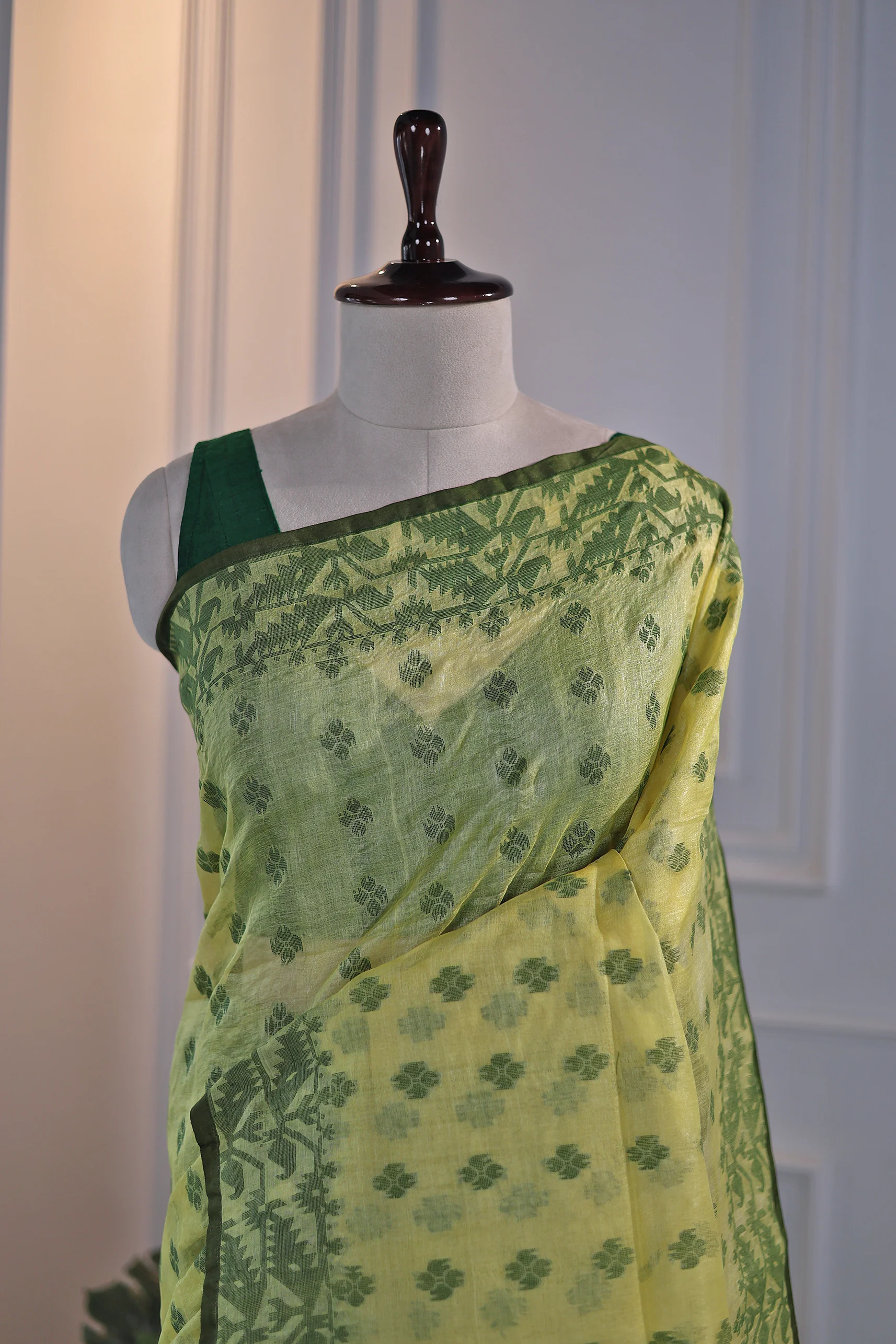
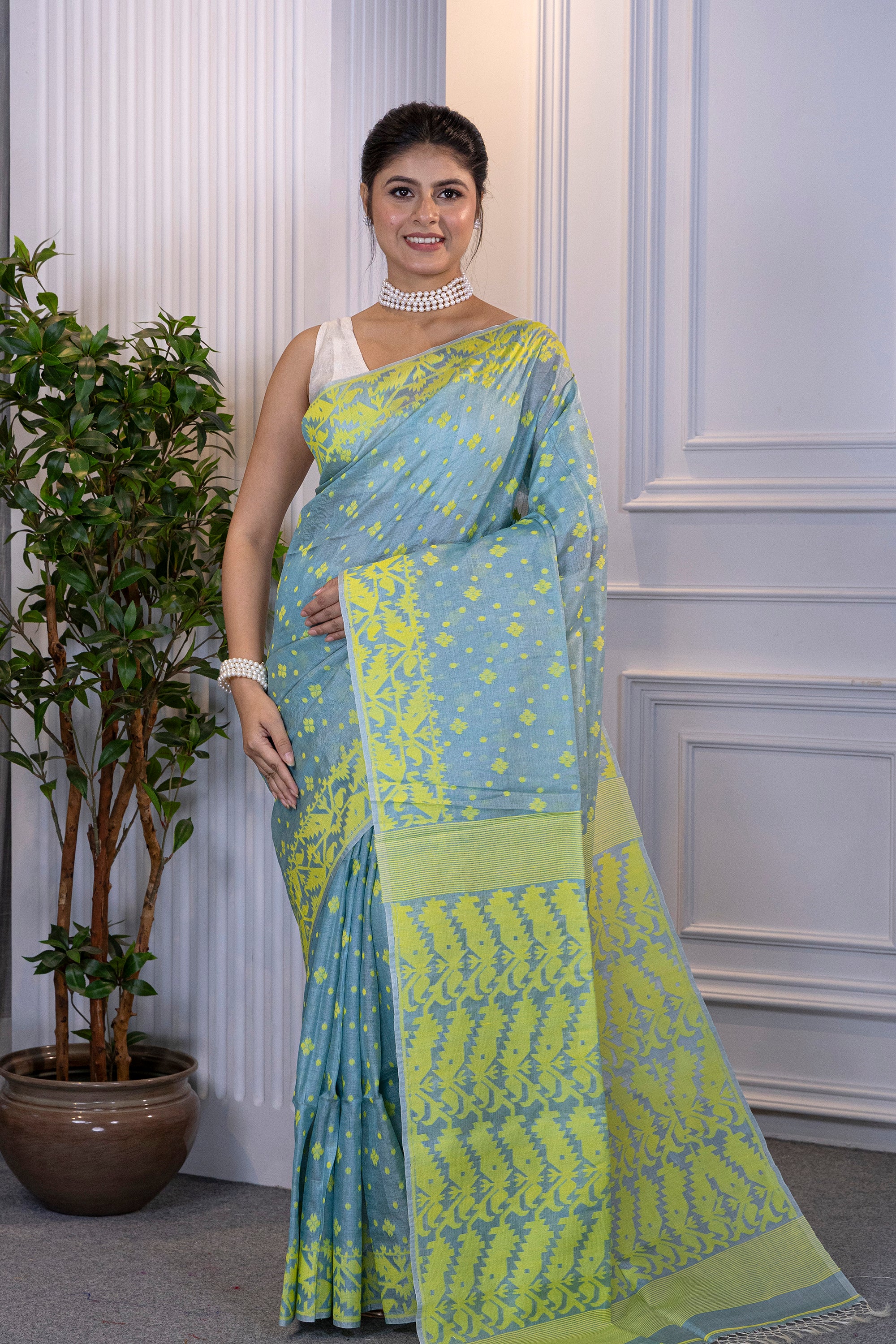
Tussar Jamdani
A Tussar Jamdani saree is a beautiful fusion of two rich textile traditions — the earthy elegance of Tussar silk and the intricate artistry of Jamdani weaving. Here's a detailed look:
🧵 Fabric: Tussar Silk (Kosa Silk)
-
Derived from wild silkworms, mostly found in Jharkhand, Bihar, Chhattisgarh, and Odisha.
-
Natural golden-beige sheen with a slightly coarse texture.
-
Breathable and lightweight, perfect for hot and humid climates.
-
Has a raw, organic beauty that sets it apart from regular silk.
🧶 Weaving Style: Jamdani
-
An ancient handloom weaving technique originating in Bengal and Bangladesh.
-
Characterized by extra weft motifs woven manually into the base fabric.
-
Designs are added thread by thread — no printing or embroidery.
-
Takes weeks or months to finish, depending on complexity.
✨ Design Features
-
Motifs: Inspired by nature – lotus, vines, paisleys, birds, and geometric shapes.
-
Patterns appear to “float” on the fabric due to the fine weaving.
-
Often has a contrasting border and pallu, with delicate, minimalist aesthetics.
-
Some versions have blended zari work for a subtle shimmer.
🎨 Color Palette
-
Tussar naturally comes in golden beige, but it’s often dyed in shades like rust, olive, indigo, maroon, and pastels.
-
Jamdani work is usually in contrast or tone-on-tone shades.
💰 Price Range
-
Pure handwoven Tussar Jamdani sarees can range from ₹8,000 to ₹50,000+ depending on the fineness and intricacy.
🧼 Care Instructions
-
Dry clean only.
-
Store in a breathable fabric bag.
-
Avoid hanging for long periods – it may stretch the silk.
-
Keep away from direct sunlight to preserve the color and texture.
Would you like help choosing between Tussar Jamdani and Katan Banarasi for a particular occasion?
Product Information
Product Information
Shipping & Returns
Shipping & Returns
Description
A Tussar Jamdani saree is a beautiful fusion of two rich textile traditions — the earthy elegance of Tussar silk and the intricate artistry of Jamdani weaving. Here's a detailed look:
🧵 Fabric: Tussar Silk (Kosa Silk)
-
Derived from wild silkworms, mostly found in Jharkhand, Bihar, Chhattisgarh, and Odisha.
-
Natural golden-beige sheen with a slightly coarse texture.
-
Breathable and lightweight, perfect for hot and humid climates.
-
Has a raw, organic beauty that sets it apart from regular silk.
🧶 Weaving Style: Jamdani
-
An ancient handloom weaving technique originating in Bengal and Bangladesh.
-
Characterized by extra weft motifs woven manually into the base fabric.
-
Designs are added thread by thread — no printing or embroidery.
-
Takes weeks or months to finish, depending on complexity.
✨ Design Features
-
Motifs: Inspired by nature – lotus, vines, paisleys, birds, and geometric shapes.
-
Patterns appear to “float” on the fabric due to the fine weaving.
-
Often has a contrasting border and pallu, with delicate, minimalist aesthetics.
-
Some versions have blended zari work for a subtle shimmer.
🎨 Color Palette
-
Tussar naturally comes in golden beige, but it’s often dyed in shades like rust, olive, indigo, maroon, and pastels.
-
Jamdani work is usually in contrast or tone-on-tone shades.
💰 Price Range
-
Pure handwoven Tussar Jamdani sarees can range from ₹8,000 to ₹50,000+ depending on the fineness and intricacy.
🧼 Care Instructions
-
Dry clean only.
-
Store in a breathable fabric bag.
-
Avoid hanging for long periods – it may stretch the silk.
-
Keep away from direct sunlight to preserve the color and texture.
Would you like help choosing between Tussar Jamdani and Katan Banarasi for a particular occasion?