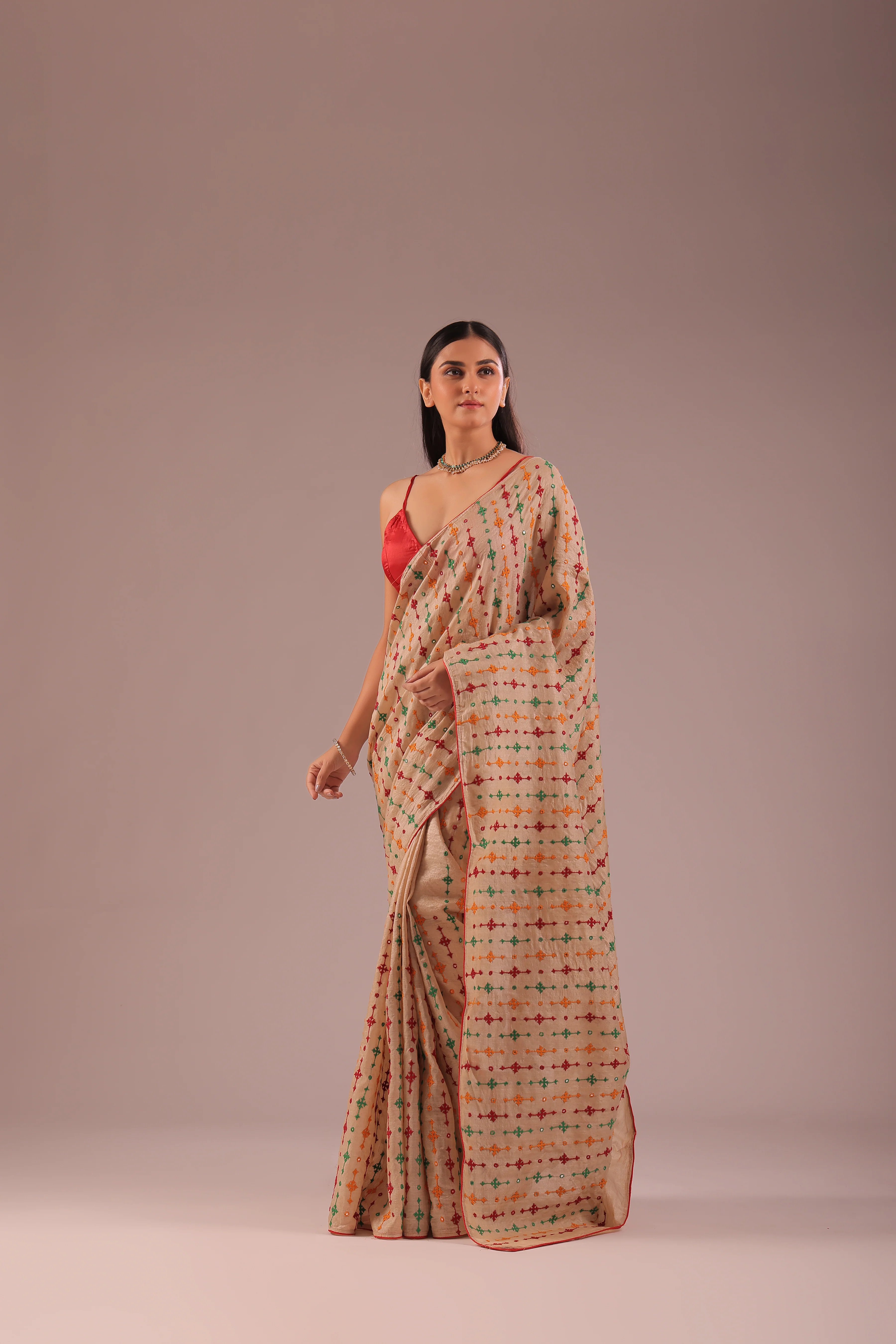
Tussar Hand Gujarati
Tussar Silk (or Tussah) is a highly valued silk variety known for its natural golden hues and rich texture. When combined with Gujarati craftsmanship, Tussar Silk attains a unique identity that reflects Gujarat’s vibrant textile traditions. Here's an overview of Tussar Silk in the Gujarati context:
What is Tussar Silk?
- Origin: Tussar silk is made from the cocoons of wild silkworms, primarily from the genus Antheraea. These silkworms are found in forests and feed on leaves of trees like Asan and Arjun.
- Texture and Appearance: Tussar silk is lightweight, breathable, and has a slightly coarse texture with a natural sheen. Its golden, earthy tones make it distinct from other silks.
Tussar Silk in Gujarat
-
Weaving Tradition:
- Gujarat, known for its textile heritage, incorporates Tussar silk into traditional weaving techniques, blending it with regional styles like Patola, Bandhani (tie-dye), and Ajrakh block printing.
- Weavers often enhance Tussar silk with Zari work, embroidery, or intricate hand-painted motifs.
-
Designs and Motifs:
- Gujarati Tussar silk sarees often feature floral, geometric, and peacock designs, reflecting the state’s artistic vibrancy.
- Patterns are inspired by the region’s history, including Mughal and Rajput influences.
-
Dyeing and Printing:
- Tussar silk in Gujarat is dyed using natural dyes derived from indigo, turmeric, and other organic sources.
- Techniques like Bandhani (tie-dye) and Ajrakh block printing are commonly applied, creating vibrant and intricate patterns.
-
Cultural Significance:
- Tussar silk garments are often worn during festivals, weddings, and traditional ceremonies in Gujarat.
- It is considered a symbol of elegance and is cherished for its eco-friendly and artisanal quality.
-
Modern Adaptations:
- Designers from Gujarat are now incorporating Tussar silk into modern apparel, such as kurtas, stoles, dupattas, and even western-style clothing.
- Sustainable fashion initiatives are reviving interest in Tussar silk by promoting handloom craftsmanship and supporting local artisans.
Caring for Tussar Silk
- Washing: Dry cleaning is recommended to preserve the texture and sheen.
- Storage: Keep the silk wrapped in muslin cloth and store it in a cool, dry place to avoid damage from moisture or pests.
- Ironing: Use a low-heat iron or steam to avoid scorching the fabric.
Would you like to explore Gujarat’s weaving centers, details on Tussar silk production, or recommendations for buying authentic Tussar silk products?
Original: $135.16
-70%$135.16
$40.55Product Information
Product Information
Shipping & Returns
Shipping & Returns
Description
Tussar Silk (or Tussah) is a highly valued silk variety known for its natural golden hues and rich texture. When combined with Gujarati craftsmanship, Tussar Silk attains a unique identity that reflects Gujarat’s vibrant textile traditions. Here's an overview of Tussar Silk in the Gujarati context:
What is Tussar Silk?
- Origin: Tussar silk is made from the cocoons of wild silkworms, primarily from the genus Antheraea. These silkworms are found in forests and feed on leaves of trees like Asan and Arjun.
- Texture and Appearance: Tussar silk is lightweight, breathable, and has a slightly coarse texture with a natural sheen. Its golden, earthy tones make it distinct from other silks.
Tussar Silk in Gujarat
-
Weaving Tradition:
- Gujarat, known for its textile heritage, incorporates Tussar silk into traditional weaving techniques, blending it with regional styles like Patola, Bandhani (tie-dye), and Ajrakh block printing.
- Weavers often enhance Tussar silk with Zari work, embroidery, or intricate hand-painted motifs.
-
Designs and Motifs:
- Gujarati Tussar silk sarees often feature floral, geometric, and peacock designs, reflecting the state’s artistic vibrancy.
- Patterns are inspired by the region’s history, including Mughal and Rajput influences.
-
Dyeing and Printing:
- Tussar silk in Gujarat is dyed using natural dyes derived from indigo, turmeric, and other organic sources.
- Techniques like Bandhani (tie-dye) and Ajrakh block printing are commonly applied, creating vibrant and intricate patterns.
-
Cultural Significance:
- Tussar silk garments are often worn during festivals, weddings, and traditional ceremonies in Gujarat.
- It is considered a symbol of elegance and is cherished for its eco-friendly and artisanal quality.
-
Modern Adaptations:
- Designers from Gujarat are now incorporating Tussar silk into modern apparel, such as kurtas, stoles, dupattas, and even western-style clothing.
- Sustainable fashion initiatives are reviving interest in Tussar silk by promoting handloom craftsmanship and supporting local artisans.
Caring for Tussar Silk
- Washing: Dry cleaning is recommended to preserve the texture and sheen.
- Storage: Keep the silk wrapped in muslin cloth and store it in a cool, dry place to avoid damage from moisture or pests.
- Ironing: Use a low-heat iron or steam to avoid scorching the fabric.
Would you like to explore Gujarat’s weaving centers, details on Tussar silk production, or recommendations for buying authentic Tussar silk products?