✨ New Arrivals Just Dropped!Explore

1 / 4
Linen Hand Gujrati
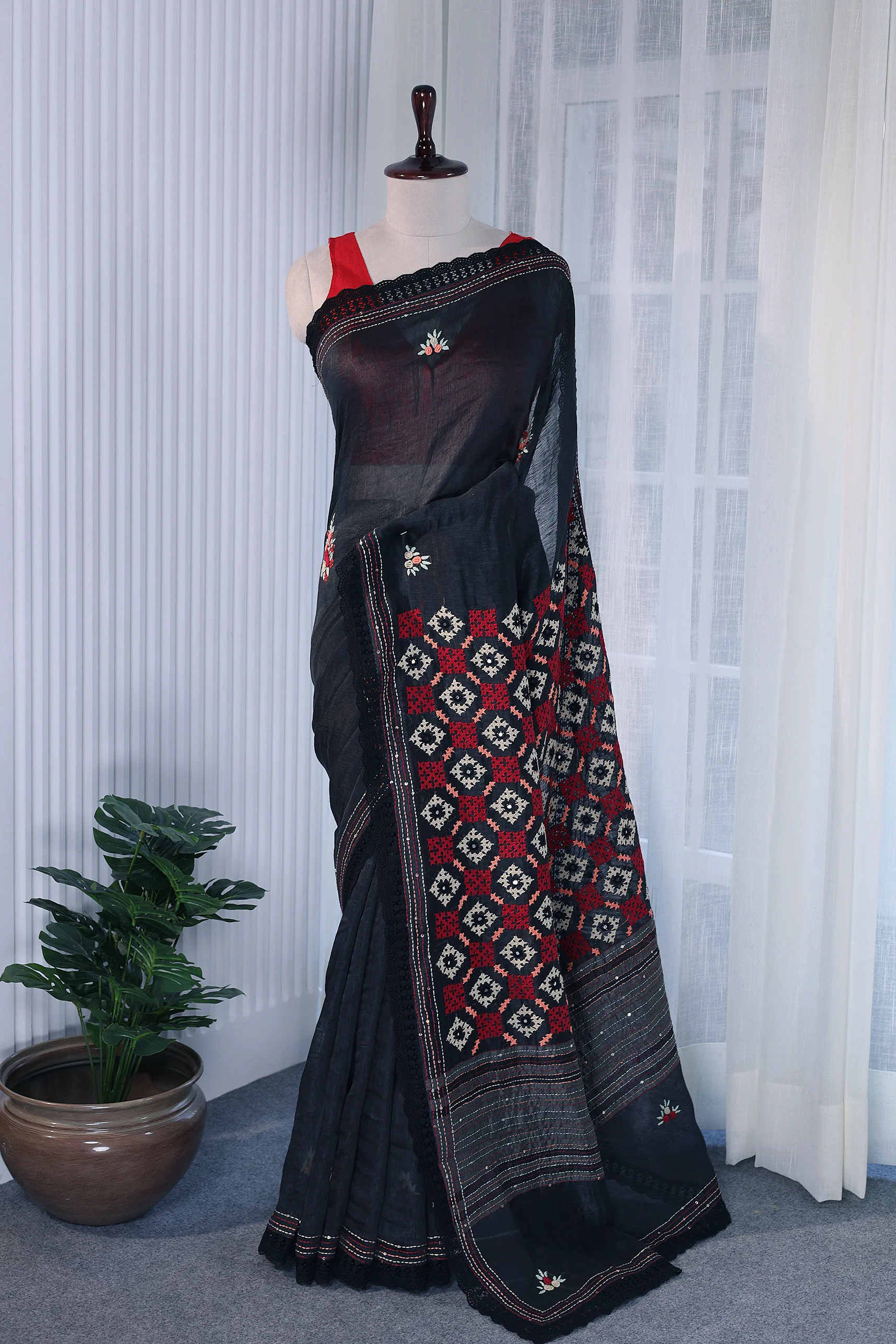
A Linen Gujarati Work Saree is a traditional Indian garment that combines the elegance of linen fabric with the intricate designs typical of Gujarati embroidery. Here's a breakdown of the details:
1. Fabric:
- Linen: Linen is a lightweight, breathable, and comfortable fabric made from the flax plant. It’s known for its soft texture and natural finish. Linen sarees are great for warm climates due to their airy and cool nature.
- Linen also has a slightly crisp texture, which adds to the overall sophistication of the saree.
2. Gujarati Work:
-
Embroidery: Gujarati work refers to the rich, traditional embroidery techniques commonly used in the region. This can include:
- Mirror Work (Abhla Bharat): Small mirrors are sewn onto the fabric, giving it a shimmering effect.
- Zari Work: Gold or silver threads are used for intricate, traditional patterns.
- Kutch Work: A hand-embroidery technique from the Kutch region, featuring geometric patterns and vibrant threads.
- Bandhani: Tie-dye techniques from Gujarat can sometimes be a part of linen sarees, where the fabric is dyed in intricate patterns before embroidery is added.
- Motifs: The work often includes floral patterns, peacocks, elephants, or intricate geometric shapes, all traditionally crafted by hand.
3. Colors:
- The saree typically features vibrant colors such as red, maroon, blue, green, and other earthy tones, accented with gold or silver threads.
- The border is often highlighted with additional embroidery or mirror work to make it stand out.
4. Pallu:
- The pallu (the end part of the saree that drapes over the shoulder) is often the focal point in a Linen Gujarati Work saree. It is usually adorned with heavy embroidery or mirror work to highlight the intricate craftsmanship.
5. Blouse:
- The blouse is usually made from the same linen fabric, though sometimes, to enhance the look, the blouse might be designed with matching embroidery work or be in contrasting colors for a vibrant look.
- Traditional blouses with a halter neck, backless, or short sleeves are commonly paired with these sarees.
6. Occasions:
- Linen Gujarati Work sarees are suitable for a variety of occasions, including weddings, festivals, cultural events, and special celebrations. They add a traditional yet modern touch, perfect for those seeking both comfort and style.
7. Care:
- Linen sarees require gentle care. They should be dry-cleaned or hand-washed in cold water to maintain the integrity of the fabric and embroidery.
- Ironing on a low setting helps keep the fabric smooth without damaging it.
Would you like to see some examples or more details on where to find them?
$85.42
Linen Hand Gujrati—
$85.42
Product Information
Product Information
Shipping & Returns
Shipping & Returns
Description
A Linen Gujarati Work Saree is a traditional Indian garment that combines the elegance of linen fabric with the intricate designs typical of Gujarati embroidery. Here's a breakdown of the details:
1. Fabric:
- Linen: Linen is a lightweight, breathable, and comfortable fabric made from the flax plant. It’s known for its soft texture and natural finish. Linen sarees are great for warm climates due to their airy and cool nature.
- Linen also has a slightly crisp texture, which adds to the overall sophistication of the saree.
2. Gujarati Work:
-
Embroidery: Gujarati work refers to the rich, traditional embroidery techniques commonly used in the region. This can include:
- Mirror Work (Abhla Bharat): Small mirrors are sewn onto the fabric, giving it a shimmering effect.
- Zari Work: Gold or silver threads are used for intricate, traditional patterns.
- Kutch Work: A hand-embroidery technique from the Kutch region, featuring geometric patterns and vibrant threads.
- Bandhani: Tie-dye techniques from Gujarat can sometimes be a part of linen sarees, where the fabric is dyed in intricate patterns before embroidery is added.
- Motifs: The work often includes floral patterns, peacocks, elephants, or intricate geometric shapes, all traditionally crafted by hand.
3. Colors:
- The saree typically features vibrant colors such as red, maroon, blue, green, and other earthy tones, accented with gold or silver threads.
- The border is often highlighted with additional embroidery or mirror work to make it stand out.
4. Pallu:
- The pallu (the end part of the saree that drapes over the shoulder) is often the focal point in a Linen Gujarati Work saree. It is usually adorned with heavy embroidery or mirror work to highlight the intricate craftsmanship.
5. Blouse:
- The blouse is usually made from the same linen fabric, though sometimes, to enhance the look, the blouse might be designed with matching embroidery work or be in contrasting colors for a vibrant look.
- Traditional blouses with a halter neck, backless, or short sleeves are commonly paired with these sarees.
6. Occasions:
- Linen Gujarati Work sarees are suitable for a variety of occasions, including weddings, festivals, cultural events, and special celebrations. They add a traditional yet modern touch, perfect for those seeking both comfort and style.
7. Care:
- Linen sarees require gentle care. They should be dry-cleaned or hand-washed in cold water to maintain the integrity of the fabric and embroidery.
- Ironing on a low setting helps keep the fabric smooth without damaging it.
Would you like to see some examples or more details on where to find them?